· 5 min read
How the New EU Customs Duty on Low-Value Parcels Affects Your Margins
Understand how the new EU customs duty on low-value parcels impacts ecommerce margins, the end of the 150 euro duty exemption, and how to protect your profits.
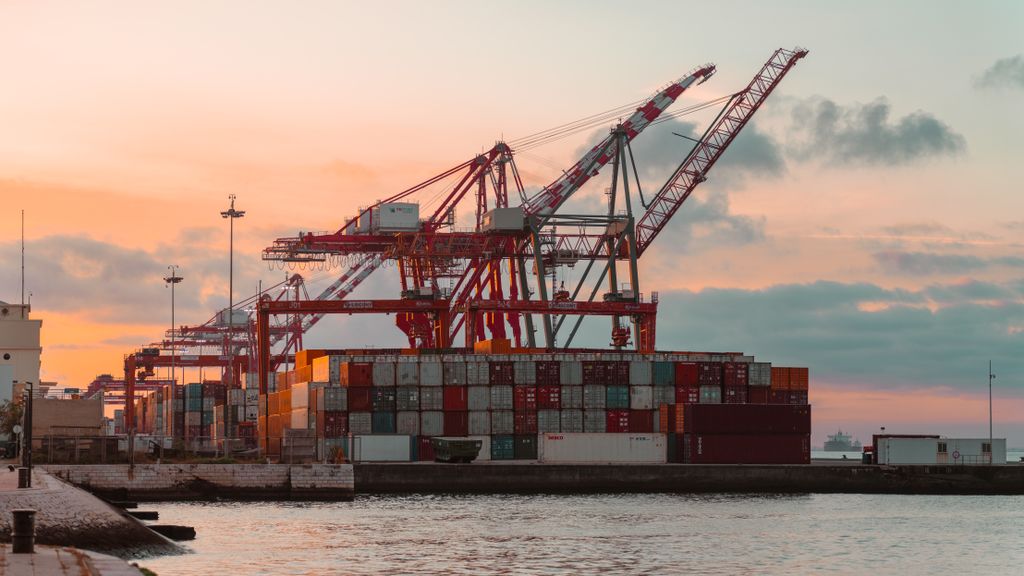
The rules governing the EU customs duty on low-value parcels have changed fundamentally, meaning that every commercial consignment entering the European Union from outside its borders is now subject to import duties regardless of its transaction value. For brands managing fulfilment in Europe, this policy shift eliminates the long-standing tax-free threshold and introduces immediate administrative and financial adjustments for direct-to-consumer shipments. This means that previous strategies designed around shipping single orders directly to European buyers must be completely reassessed to avoid severe margin erosion or customs delays.
What is the new EU customs duty on low-value parcels?
Under the revised framework, the European Union has implemented a major overhaul of its import regulations, marking the end of the 150 euro duty exemption. Historically, goods imported into the EU with a value below 150 euros were exempt from customs duties, though they remained subject to value added tax (VAT). This threshold allowed overseas retailers to ship inexpensive individual items directly to European consumers with minimal border friction and no customs duty overheads.
This exemption has been removed under the broad initiative known as the EU de minimis removal. Since 1 July 2026, all commercial goods entering the EU from non-member countries are subject to customs duties, regardless of their declared value. The change aims to close a loophole that previously favoured non-EU sellers over domestic European businesses, while also combating the systematic undervaluation of parcels at the border. For international ecommerce merchants, this means that even a package containing a single ten-euro item now triggers a customs duty liability when it crosses the EU border.
The mechanics of the 3 euro customs duty per item
To prevent a complete bottleneck at customs clearance points, the EU introduced a simplified tariff system as a transitional measure. For sellers registered for the Import One-Stop Shop (IOSS), a flat 3 euro customs duty per item category (specifically, per tariff heading) applies to low-value consignments. The IOSS is an online portal that simplifies the declaration and payment of VAT for distance sales of imported goods. By utilising this system, registered merchants can apply the flat duty rate directly at the point of sale.
However, this flat-rate duty is only a temporary arrangement. It is designed to ease the administrative transition until the EU customs data hub for ecommerce is expected to take over in 2028. Once the customs data hub is fully operational, the flat-rate option will be phased out. At that point, normal duty rates based on precise product classifications will apply to all imports, requiring detailed Harmonised System (HS) codes for every single low-value item.
The rising cost of shipping small parcels into the EU from China, the UK or the US
The removal of the duty-free threshold has completely rewritten the economics of shipping small parcels into the EU from China, the UK or the US. In the past, direct-to-consumer brands in these regions could ship individual orders via postal channels or express couriers with relative ease. The lack of customs duties kept prices competitive and administrative hurdles low.
Under the current rules, the cost of these direct shipments has risen significantly. A flat 3 euro duty on a low-value item may seem nominal at first glance, but it represents a massive percentage increase on inexpensive goods. For example, a merchant shipping a 15-euro phone case from the United States or the United Kingdom now faces a 3 euro duty, which represents a 20 per cent surcharge on the product value. When you factor in international shipping rates, currency conversion fees, and carrier presentation fees, the total cost of delivery can quickly exceed the retail value of the product itself. For high-volume, low-margin businesses, this change makes direct-to-consumer international shipping highly unviable.
Who pays the duty on these imported parcels?
In the practical world of ecommerce, there are two primary ways to handle these new customs duties, and both present distinct challenges for merchants. The first option is to collect the duty from the consumer at the checkout. If a brand is registered for IOSS, they can calculate the flat 3 euro duty during the transaction and remit it directly. While this ensures the customer does not receive an unexpected bill at their doorstep, it visibly inflates the checkout price, which can lead to higher cart abandonment rates.
The second option is to ship the goods under Delivery Duty Unpaid (DDU) terms. Under this model, the customs duty is collected from the customer by the courier before delivery can be completed. This approach is highly risky for brand reputation. Consumers are frequently surprised by additional fees, carrier handling charges, and customs delays. If a buyer refuses to pay the 3 euro duty and the associated carrier processing fees, the parcel is either returned to the sender at a high cost or simply destroyed at the border.
Why bulk importing to European warehouses is now the standard
Given the rising costs and operational friction of direct-to-consumer shipping, the strategic case for holding stock locally within the EU has never been stronger. Instead of sending thousands of individual parcels across the border, brands are increasingly importing their inventory in bulk shipments directly to a European warehouse.
Bulk importing changes the tax and duty calculations entirely in favour of the merchant. When goods are imported in bulk via ocean, rail, or air freight, customs duties are calculated once on the wholesale value of the shipment rather than the retail transaction price of individual orders. Once the container clears customs at the port of entry, the inventory is transferred to an EU-based warehouse. From there, individual orders are fulfilled and shipped locally to consumers across all member states. Because these local shipments are intra-community deliveries, they are completely free from border checks, customs duties, and unexpected carrier fees.
Fulfilling orders from within the EU also dramatically improves delivery speeds and customer satisfaction. Instead of waiting weeks for a parcel to arrive and clear customs, European buyers can receive their orders within days, or even hours, via local carrier networks.
Transitioning your supply chain for the future
Adapting to the end of the 150 euro duty exemption requires a structural shift in how non-EU brands view their supply chains. Relying on direct-to-consumer postal networks from outside Europe is a strategy with a declining lifespan. The temporary 3 euro flat rate offers a brief window of adjustment, but the impending transition to the EU customs data hub in 2028 means that data compliance requirements will only become more stringent.
Establishing a localised inventory footprint within the European market is the most effective way to future-proof your business. By partnering with a third-party logistics provider in Europe, you can transition from a high-risk, high-cost international shipping model to a streamlined, local fulfilment operation. This not only insulates your brand from changing customs regulations but also provides a superior customer experience that can help you win and retain European buyers in an increasingly competitive marketplace.